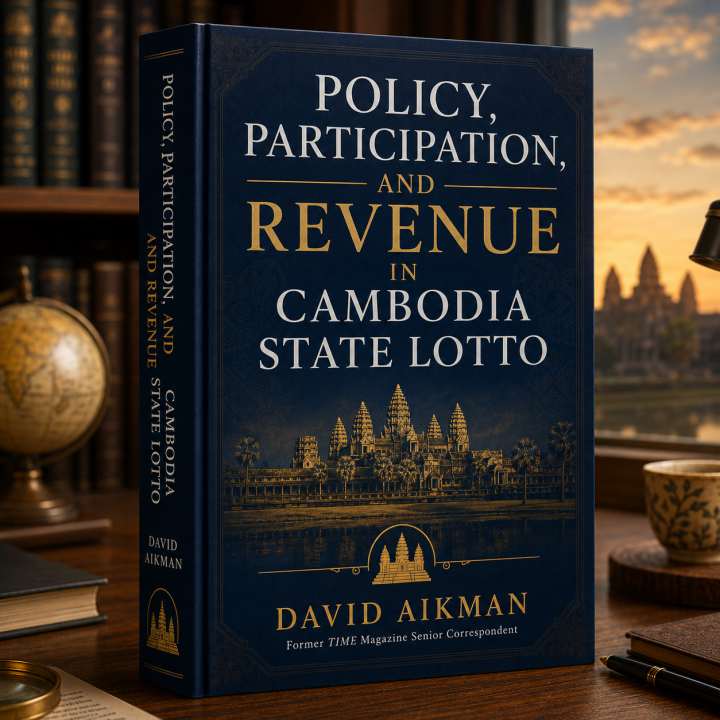

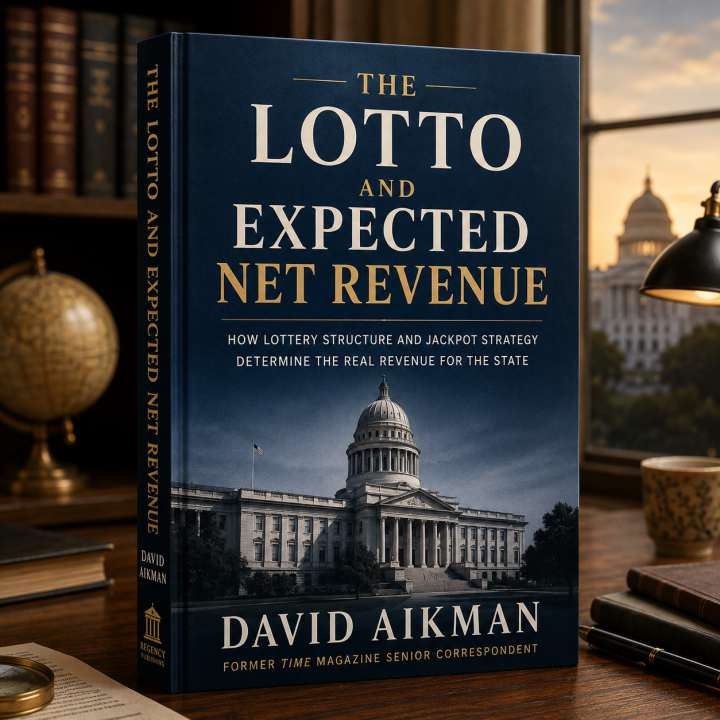
The Lotto and How the Jackpot Boosts State Coffers
Can altering lottery prize distribution strategies generate billions of rupiah for regional treasuries? Many assume that increasing the jackpot would result in a loss for the state, yet this book reveals the exact opposite. Drawing on real-world data from the Cambodia Lotto, the book examines how seemingly minor decisions within a lottery system can drastically influence net state revenue.
This book offers a fresh perspective on public economics analysis through a novel multi-period sales model. Employing a rigorous mathematical approach, David Aikman maps out player psychology—including the human tendency to select specific number patterns—to predict the likelihood of prize rollovers. This cutting-edge formula corrects the flaws of earlier economic models, yielding revenue estimates that are far more accurate and unbiased.
Systematically structured, the book provides empirical evidence that rewarding players with larger prize portions is, in fact, the key to maximizing the government's net profits. It is essential reading for fiscal policymakers, economic analysts, academics, and game theory enthusiasts alike—anyone interested in seeing how mathematics and human psychology drive the mechanics of public finance.